

ONES TO WATCH:
UK EDTECH PROVIDERS
Online providers are reshaping how people learn, while social platforms are emerging as informal classrooms.
Education technology is undergoing a period of rapid transformation. At the heart of this shift is a generation of digital-native learners, whose demand for flexible, engaging education is setting the pace for change.
In this roundup, we highlight some of the most notable edtech companies - businesses using artificial intelligence, learner-first design and bold strategies to redefine modern education.

FIVE BUSINESSES RESHAPING HOW PEOPLE LEARN
1 // CODE FIRST GIRLS
As the tech industry continues to grapple with a widening skills gap, Code First Girls (CFG) has established itself as a key player in addressing it. Founded in 2012, the UK-based social enterprise has grown from a single nine-week coding course into the world’s largest provider of free coding education for women and non-binary people.
To date, CFG has taught more than 200,000 learners, delivered £75 million worth of free training, and built partnerships with 130 global companies and 100 universities. Its community is notably diverse: 57% of learners come from underrepresented ethnicities, 27% from low-income backgrounds, and nearly 20% identify as neurodiverse.
Looking ahead, CFG has set an ambitious target to create one million opportunities for women to learn to code within the next five years. The organisation is on track to become the world’s first edtech unicorn dedicated to women. At the same time, its own research underscores persistent challenges: half of women leave tech roles by age 35, only 5% reach leadership positions, and in 2025 there could be just one qualified woman for every 115 tech jobs.
2 // FUSE UNIVERSAL
Fuse Universal is a cloud-based training platform that aims to make learning at work easy and intuitive. Instead of asking employees to complete long training modules, Fuse lets them search for answers in the moment - suggesting videos, manuals, or tips from colleagues so they can solve problems on the spot.
The London‑based edtech champion, founded in 2008 by Steve Dineen, has attracted strong investor support over the years. A $20 million growth round in 2018 led by Eight Roads Ventures, followed by a $25 million Series B in 2021, helping bring total funding to around $50 million. Backed by this investment, Fuse is pushing forward with its AI-driven approach to workplace training and its vision to make corporate learning feel as intuitive and appealing as consumer technology.

3 // EDUME
EduMe is a mobile-first training platform built for the 2.7 billion employees who aren’t office-based, from delivery drivers to call centre staff and frontline retail workers.
Instead of long, formal courses, EduMe delivers short, interactive lessons directly to people’s phones, so they can learn while on the job. The platform is built to make training easier to complete, speed up onboarding, and reduce dropout rates. Its ‘microlearning’ approach - modules that can be completed in just minutes - allows employees to fit training into the rhythm of their working days while giving employers real-time insight into team progress.
Uber, Vodafone, and Marriott are already on board, and after a $20 million Series B from Prosus, EduMe is setting its sights on further international expansion.
4 // MYEDSPACE
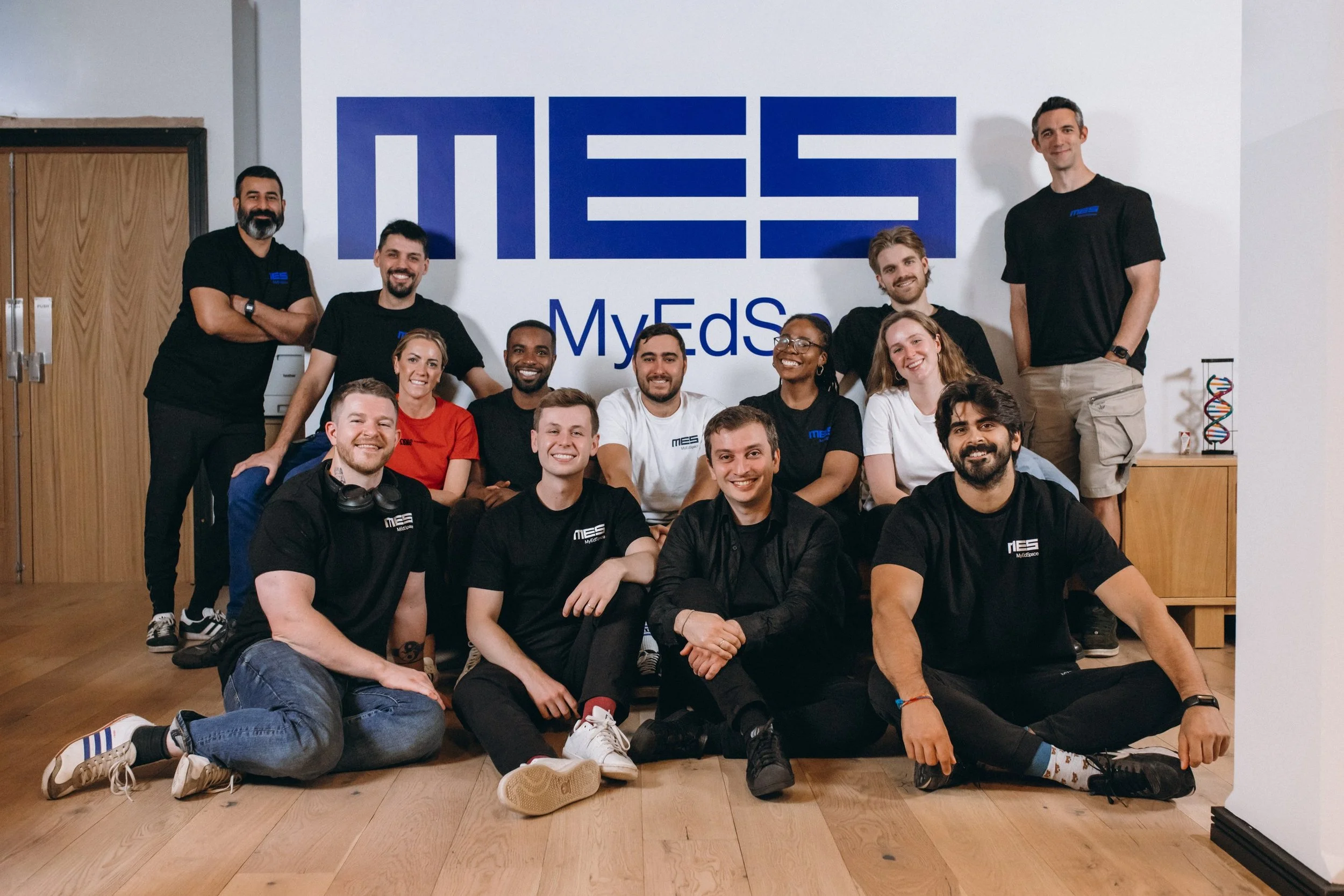
Teachers are leaving the profession in record numbers - 40,000 in England alone last year - yet demand for high-quality education has never been greater. Founded in 2022, MyEdSpace is tackling that challenge head-on with a simple promise: world-class teaching, delivered live and online, and at an affordable price.
Lessons are interactive and proven to deliver results. In 2024, 58% of MyEdSpace students scored grades 7–9 at GCSE - more than double the national average. Teachers are rigorously selected and use social media to reach millions, engaging students in ways traditional classrooms simply can’t.
The London-based startup has already taught tens of thousands of students in more than 20 countries, growing largely through word of mouth. Co-founders Sean Hirons and Kharis Yanakidis, both from families of educators, left careers in finance to build the platform they wish they’d had at school. Now, with new funding behind it, MyEdSpace is scaling fast - aiming to reach one million learners within five years and prove that affordable, inspiring education can transform outcomes at scale.
Read about the work we do with MyEdSpace here.
5 // BIBLIU
According to the Social Mobility Foundation's latest research, three in ten students from working class backgrounds don’t have access to the textbooks and revision guides they need. Nearly half (45%) of undergraduates have skipped meals because they are short of cash.
For many students, textbooks are simply unaffordable. BibliU is fixing that. Its platform gives students instant access to all the textbooks and reading materials they need at no extra cost. Institutions pay a flat fee per student for content access, which is then provided to students on the first day of class, either through a library's digital reserve or a campus-wide Equitable Access program.
Backed by Guinness Ventures, Nesta, and the UK Government via Innovate UK, BibliU already works with more than 150 universities worldwide.